Less Rain, More Damage
Snowflake gets less precipitation than the mountain towns and its chimneys are frequently in worse condition. The reason is sun and cycling rather than water volume.
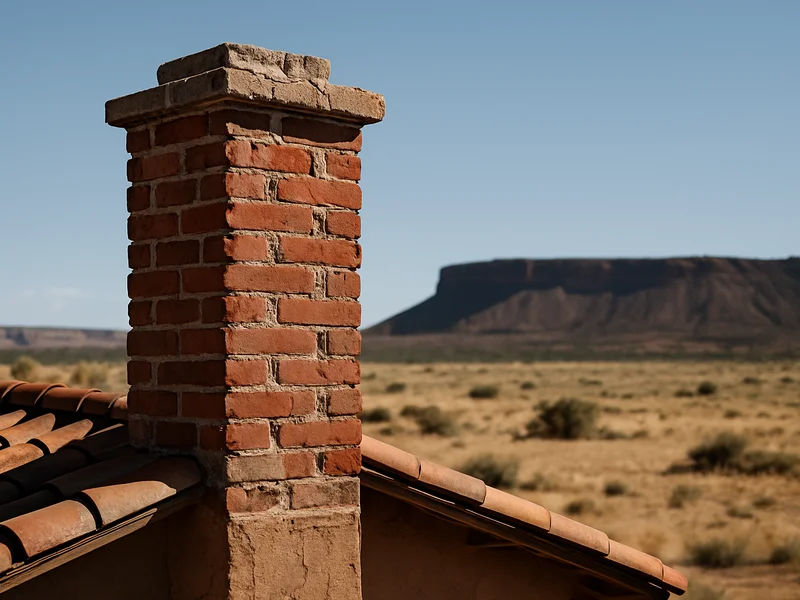
Out here masonry is fully exposed - no canopy, no shade, high UV at 5,600 feet, and daily temperature swings that are far wider than under the pines. Mortar gets baked, dried and cycled until the joints erode to a depth you can put a finger into. Once they are open, it does not matter that there is less rain falling: what does fall has a direct route into the chimney core.
Historic Brick Needs Historic Mortar
Snowflake was settled in the 1870s and a real share of the older housing is original soft-fired brick laid in lime mortar. This is the single most important thing on this page: do not let anyone repoint that with modern high-cement mortar.
Lime mortar is deliberately softer than the brick around it. It is the sacrificial element - it takes the movement and the salt and erodes, and you repoint it every few decades. Modern Portland-heavy mortar is harder than soft historic brick. Put it in those joints and the movement has to go somewhere else, so it goes through the brick face instead. The result is spalled, crumbling brick and a repair that has actively destroyed the thing it was meant to protect - and it is not reversible.
If your chimney is genuinely old, we will say so and quote a lime-based mix. If the job turns out to be bigger than a chimney, we will tell you it wants a mason rather than take it on.
Repellent on Old Brick
Breathable repellent is even more important on historic masonry than on modern. Soft-fired brick is porous and it must be able to dry outward. A film-forming sealer on old brick traps moisture and salts behind the face and takes the face off within a few seasons. Breathable siloxane only.
Also in Snowflake
Chimney Waterproofing & Crown Repair elsewhere
Chimney Waterproofing & Crown Repair in Snowflake
Tell us the appliance and how it is used. You get a firm number before anyone starts.
Get a Free Quote